
Subscribe to our Blog
We're committed to your privacy. SayOne uses the information you provide to us to contact you about our relevant content, products, and services. check out our privacy policy.


Generating table of contents...
Spending thousands on driving traffic to your e-commerce store but constantly failing to convert them? You might be doing everything right, but overlooking one critical factor: product image quality can significantly diminish your conversion rate. One store discovered the power of AI to turn things around and boost revenue within months. Read on to discover how.
A newly launched e-commerce apparel store experienced very low sales, despite significant website visits and focusing their marketing strategies on conversion. Analysis revealed the reason to be low-quality and inconsistent product images that failed to attract visitors’ attention. They approached SayOne to optimize their product images automatically, as manual editing delayed their product launches.
Here are the challenges the e-commerce store faced that left the store low in sales.
The product images had varying backgrounds, lighting, and angles, which made the website look unprofessional.
Manually editing the product images to perfection was time-intensive and slowed down the product launches, leading to an expansion of the hiring budget.
The unclear and unappealing visuals often led potential customers to abandon carts and engage less with the e-commerce store.
As a result, the company needed a scalable and efficient solution to enhance image quality and consistency without inflating their operational costs.
We solved these challenges by creating an intelligent product image automation workflow orchestrated by n8n, using Gemini AI to enhance image quality and optimize it to match the brand. The workflow connected Shopify, Google Gemini, AWS, and CDN via n8n. As a result, every product uploaded to Shopify is automatically cleaned, optimized, and published without manual involvement. Here’s how the workflow helped the e-commerce store solve its challenges and achieve results.
AI instantly removed inconsistent backgrounds and used settings that aligned with the brand in terms of color and style in order to ensure the images are consistent and reflect the brand identity.
The workflow automatically adjusted the images’ brightness, contrast, sharpness, and color balance for professional-grade images.
By automating the workflow, images uploaded to Shopify get automatically improved and updated to the storefront in minimal time, speeding up product launches.
The automated optimization process managed to optimize thousands of images simultaneously, making scaling faster.
Even though the workflow setup was completed within a week, we had to overcome some challenges during that time.
Here’s how we addressed the issues for efficient execution.
The automation generated significant results that eventually led to faster business growth and customer loyalty.
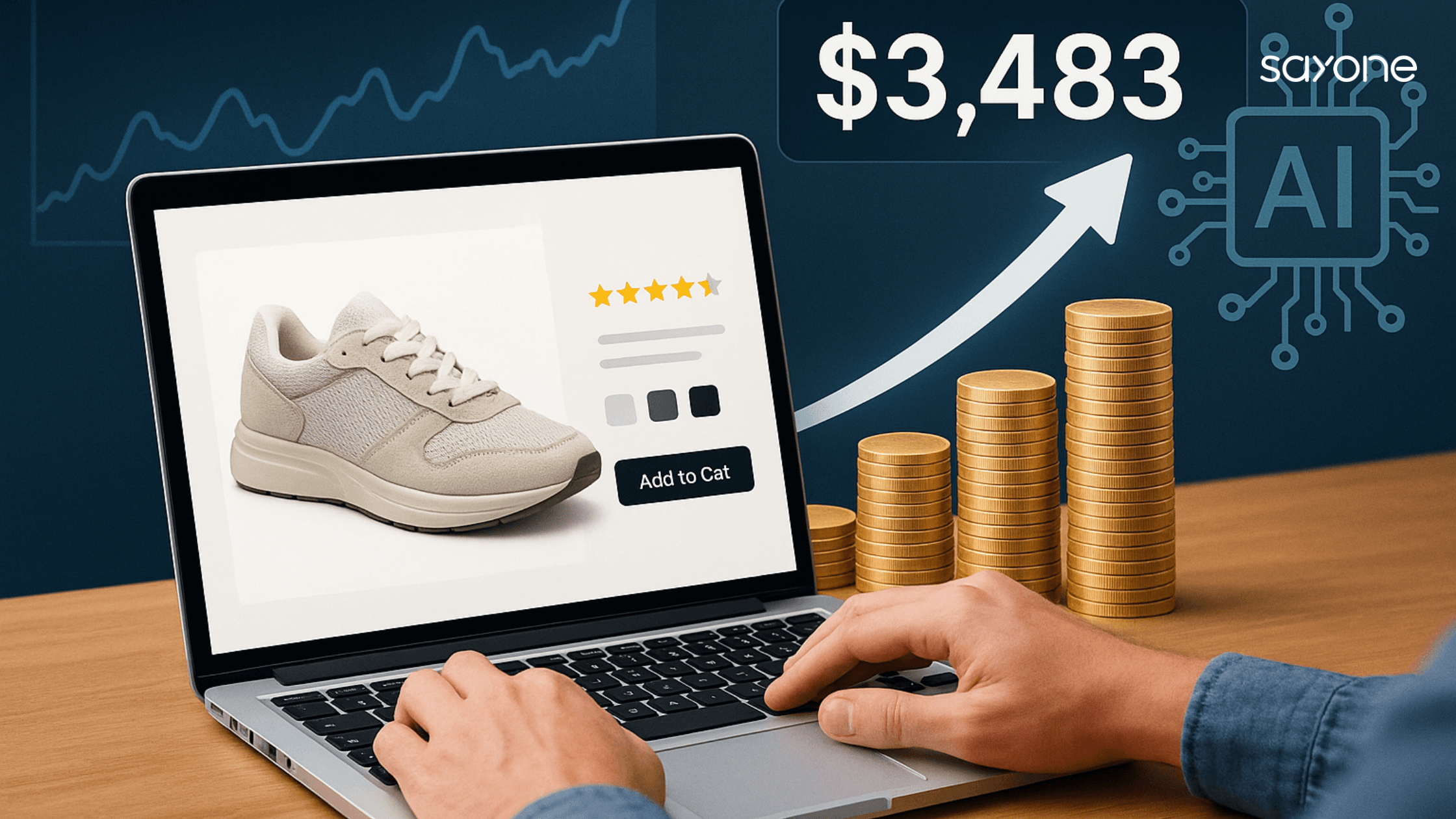
The e-commerce store saw a 28% increase in monthly revenue from $2,700 before product image optimization to $3,483 a month following the workflow setup.
Cart abandonment rates reduced significantly, and conversions increased from 1.5% to 2.8%, as the product image looked attractive.
Click-through rates on product pages increased by 35%, and average session duration increased by 20% as the optimization made the website professional.
Automation reduced image processing time by 80%, minimizing the spend on photo editors and increasing the speed of product launches.
Addressing inconsistent image quality requires robust AI configurations to handle diverse inputs, such as varying resolutions and lighting conditions. Tackling low engagement highlighted the critical role of high-quality visuals in building customer trust, reaffirming the necessity for AI-powered solutions that emphasize visual consistency and professionalism.
After automating product image optimization with AI, the e-commerce store plans to automatically match these images with their corresponding metadata using an AI metadata matcher.
Integrating AI into an e-commerce store not only improves its efficiency but also solves critical challenges effectively. As a result, SayOne offers custom AI solutions as well as AI tools like virtual try-ons to help e-commerce stores increase revenue and scale faster. Contact us to know more.
AI product image optimization is the process of automatically enhancing, resizing, standardizing, and enriching product images for e-commerce websites by artificial intelligence to ensure images are high-quality, consistent, and ready for multiple sales channels and search engines.
AI understands the images’ clarity, composition, file size, and background quality, then automatically applies edits such as background removal, sharpening, resizing, and color correction to meet platform standards or brand guidelines.
Yes, most AI tools can bulk-edit images for specific aspect ratios, requirements, and styles needed for different platforms like Shopify, Amazon, or regional online stores, saving time and maintaining visual consistency.
AI automation improves speed, consistency, and scalability, processing thousands of images quickly, reducing human error, and ensuring brand standards without requiring costly manual labor.
Optimized images have smaller file sizes, which reduces page load time and bounce rates. Faster sites improve both user experience and SEO rankings, contributing directly to higher conversion rates.
We're committed to your privacy. SayOne uses the information you provide to us to contact you about our relevant content, products, and services. check out our privacy policy.


We collaborate with visionary leaders on projects that focus on quality