
Subscribe to our Blog
We're committed to your privacy. SayOne uses the information you provide to us to contact you about our relevant content, products, and services. check out our privacy policy.


Generating table of contents...
Today, retail has evolved from selling products to creating experiences that feel effortless and personalized, and apps have a significant role to play. Customers only stay loyal to those brands that recognize their preferences, anticipate their needs, and offer convenience throughout the shopping journey. They want to discover products effortlessly, try them virtually, and receive recommendations that feel tailor-made. For retailers, meeting these expectations requires more than traditional e-commerce platforms; it demands intelligent systems powered by Artificial Intelligence (AI).
From virtual try-ons that reduce purchase hesitation to intelligent search engines that understand customer intent, AI-enabled apps are redefining how retailers engage with their audiences. The shift is about building platforms that learn, adapt, and evolve alongside consumer behavior.
For the retail industry, the use of AI-powered apps is beneficial in that they can fill the gap between customer needs and reality. The apps enable companies to shift from being reactive to being proactive. Rather than using generic promotions, the apps are capable of providing personalized promotions to customers in real time. The retail companies with AI-enabled apps see:
In conclusion, AI-powered apps are becoming the new norm for retail success, enabling companies to provide experiences that are human-like, even when they are machine-driven. However, achieving this requires specialized AI expertise that is hard to source.
Here are some of the major AI features that retail apps need to include to offer customers a smooth shopping experience.
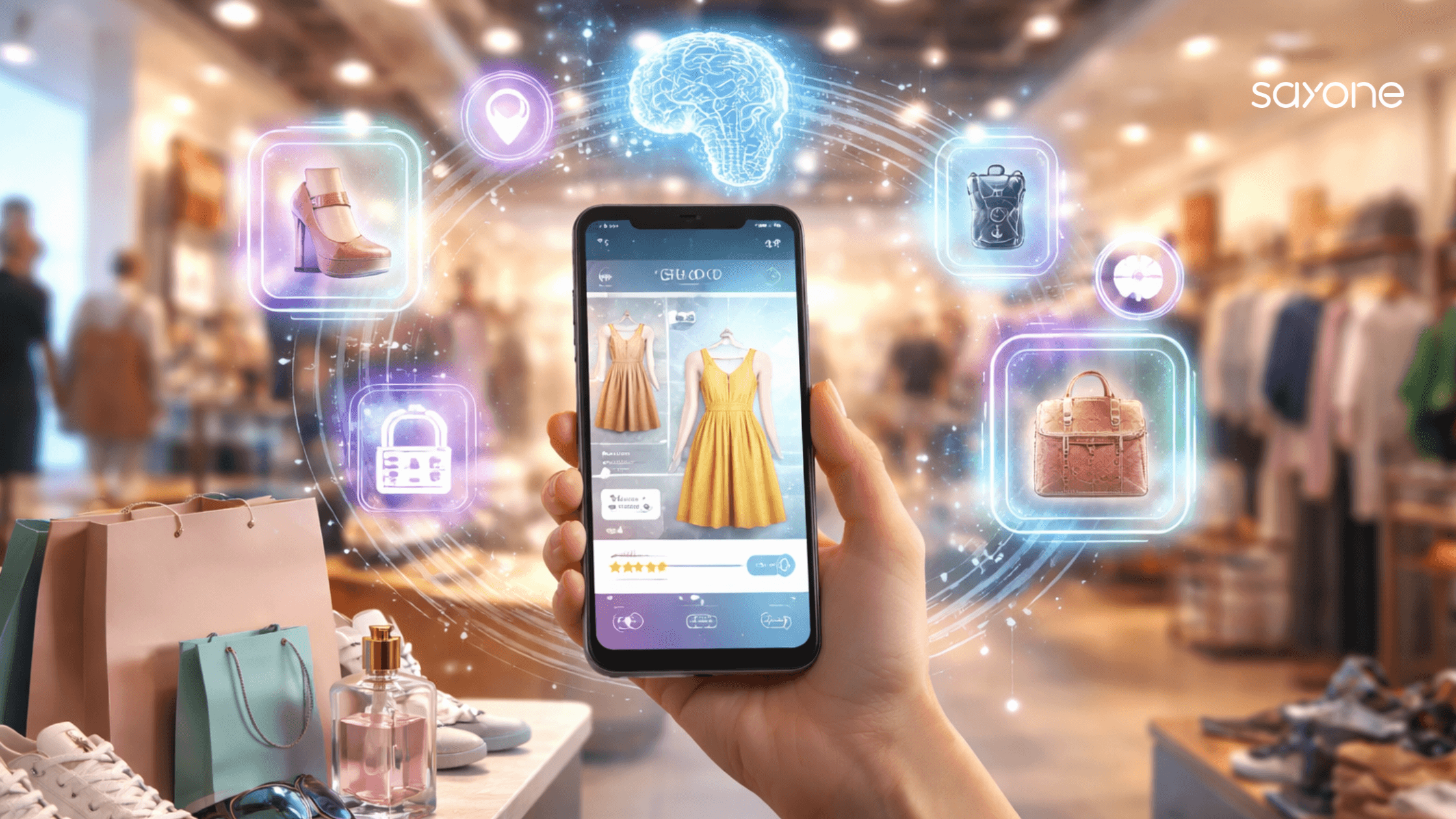
While traditional keyword-based search often frustrates customers, AI-enabled search understands context, intent, and even visual cues. For example, a customer uploading a photo of a jacket can instantly find similar products in the catalog. This kind of intuitive discovery keeps customers engaged and drives conversions.
Retail apps with this feature enable customers to virtually try products before making a purchase decision. This not only boosts confidence in purchases but also reduces returns, a win for both customers and retailers.
Tracking visitors’ activity in the store app, like the number of store visits, search history, and so on, with AI helps send personalized recommendations and market products that are most likely to be bought based on their browsing patterns.
Retailers often struggle with managing huge product catalogs manually, which can be overcome by building apps with an AI metadata matcher. It can automatically match product images with their metadata by analysing product descriptions and attributes. This improves searchability and reduces manual effort.
Creating an intelligent retail platform needs more than plugging in AI features; they need to be strategically integrated into apps that support the entire retail ecosystem. Retailers can approach it with:
Begin with the shopper’s journey, understand their pain points, and design AI features that solve them.
Make sure that the apps can handle growing data volumes and evolving AI models.
AI apps should connect smoothly with existing ERP, CRM, and e-commerce systems.
AI thrives on data, so, apps should be designed to learn and improve over time.
Developing intelligent platforms using AI needs experienced developers who have knowledge of retail as well as AI technology. However, those developers are in short supply and in high demand, which makes their onboarding challenging. Also, retailers struggle in negotiating compensation that aligns with market expectations and retaining them long enough to see a project through. Moreover, hiring full-time AI developers for a single project is costly and unnecessary when their expertise is only needed during development.
This is why most retailers are now opting for a more flexible solution: hiring developers from SayOne who have experience with AI specifically for designing and developing the app, only until the platform is launched. This approach ensures access to the right skills at the time of demand, without the long-term overhead of maintaining a permanent AI team.
Are you wondering how this works for your retail business? Connect with us to learn how our AI experts can help you build intelligent retail apps tailored to your needs.
We're committed to your privacy. SayOne uses the information you provide to us to contact you about our relevant content, products, and services. check out our privacy policy.


We collaborate with visionary leaders on projects that focus on quality