
Subscribe to our Blog
We're committed to your privacy. SayOne uses the information you provide to us to contact you about our relevant content, products, and services. check out our privacy policy.


Generating table of contents...
For most e‑commerce stores, the biggest fear is failing to fulfill orders due to unexpected stockouts. Even with constant inventory monitoring, the risk escalates during peak sales events, when demand increases sharply and stockouts occur without warning. If your e‑commerce business faces similar challenges, this case study shows how an automated low‑stock alert system can transform inventory management and prevent costly disruptions.
A mid-sized e-commerce store on Shopify, dealing in fashion and accessories, experienced recurring stockouts of high-demand items, leading to lost revenue and frustrated customers. The store also faced significant setbacks during peak sales events like the Black Friday and Cyber Monday. In search of a solution, the e-commerce business approached SayOne to build a system that improves inventory visibility. This case study explores how we built an efficient and scalable solution that solved the store’s challenges and generated measurable results.
The e-commerce store continuously expanded their product catalog and sales channels while relying on Shopify's native inventory management features. However, they encountered several pain points:
The best-selling items went out of stock more frequently and the store failed to meet unpredictable demand more often. This resulted in lost sales estimated at 15-20% of potential revenue and reduced customer retention.
Manually monitoring warehouse inventory levels across a single fulfillment center led to delayed reordering and over-reliance on periodic spreadsheet checks.
Low stock or incoming orders were not identified in time which made inventory management reactive rather than proactive.
The integration gap between Shopify and inventory systems led to limited visibility and increased overselling.
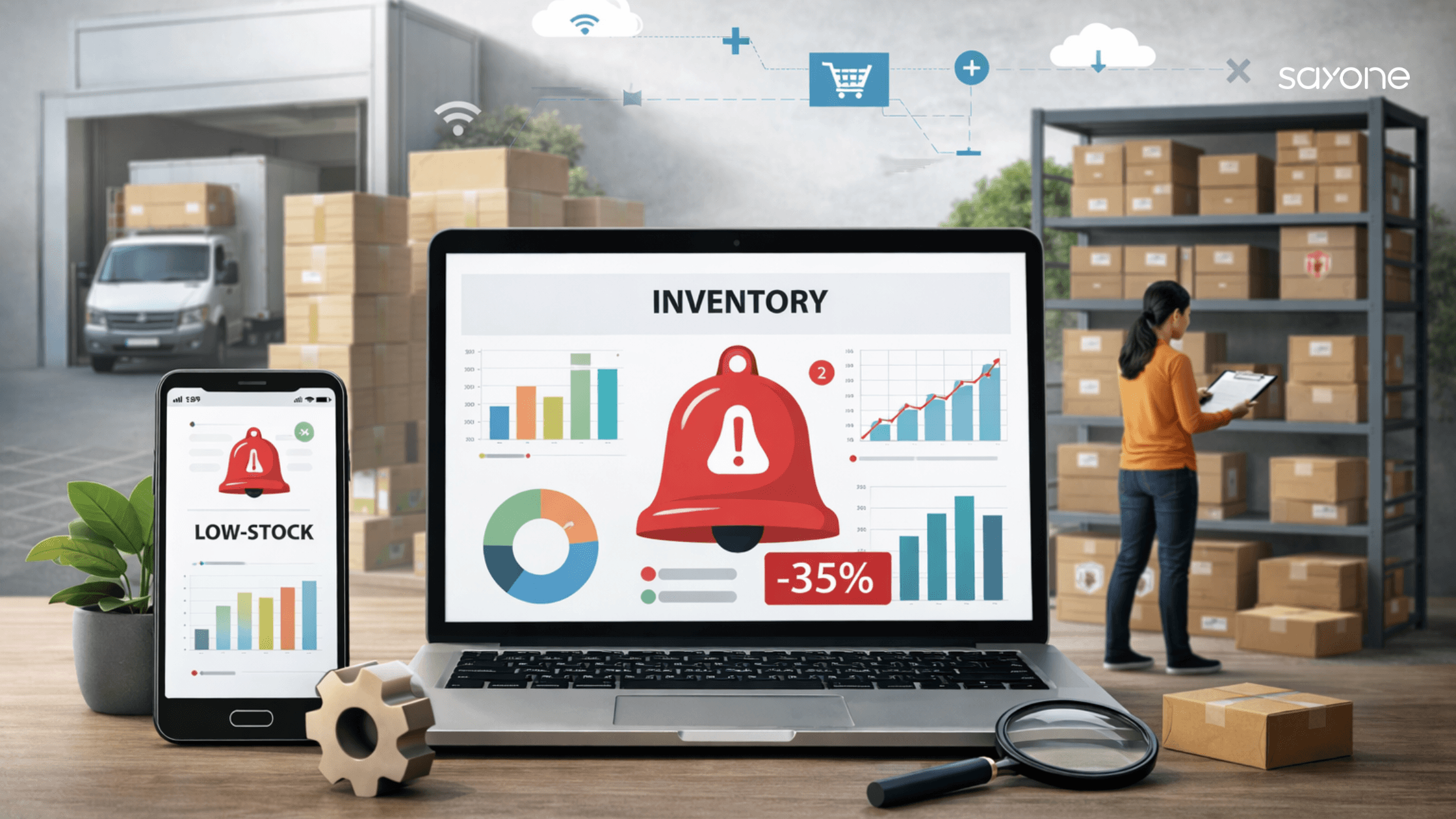
SayOne deployed a low-code system incorporating n8n workflow automation and WhatsApp that alerts about the decrease in stock beyond a predefined level and new orders in real-time. The solution improved the e-commerce store’s inventory management by combining native capabilities with automated and proactive alerts.
With n8n as the automation engine, the e-commerce store no longer had to rely on manual checks or delayed reports. The system continuously listens for key events and triggers predefined actions automatically.
When inventory crosses the defined threshold, the system triggers an immediate alert, giving teams sufficient time to initiate restocking or rebalance inventory across locations.
The system informs store owners and operations about orders in real time without having to login to dashboards, improving response time during high-volume sales periods.
The alert is sent to stakeholders via WhatsApp owing to its immediacy and high engagement rates, even outside business hours.
The implementation was completed in five days during which we overcame the following way to make the process smoother.
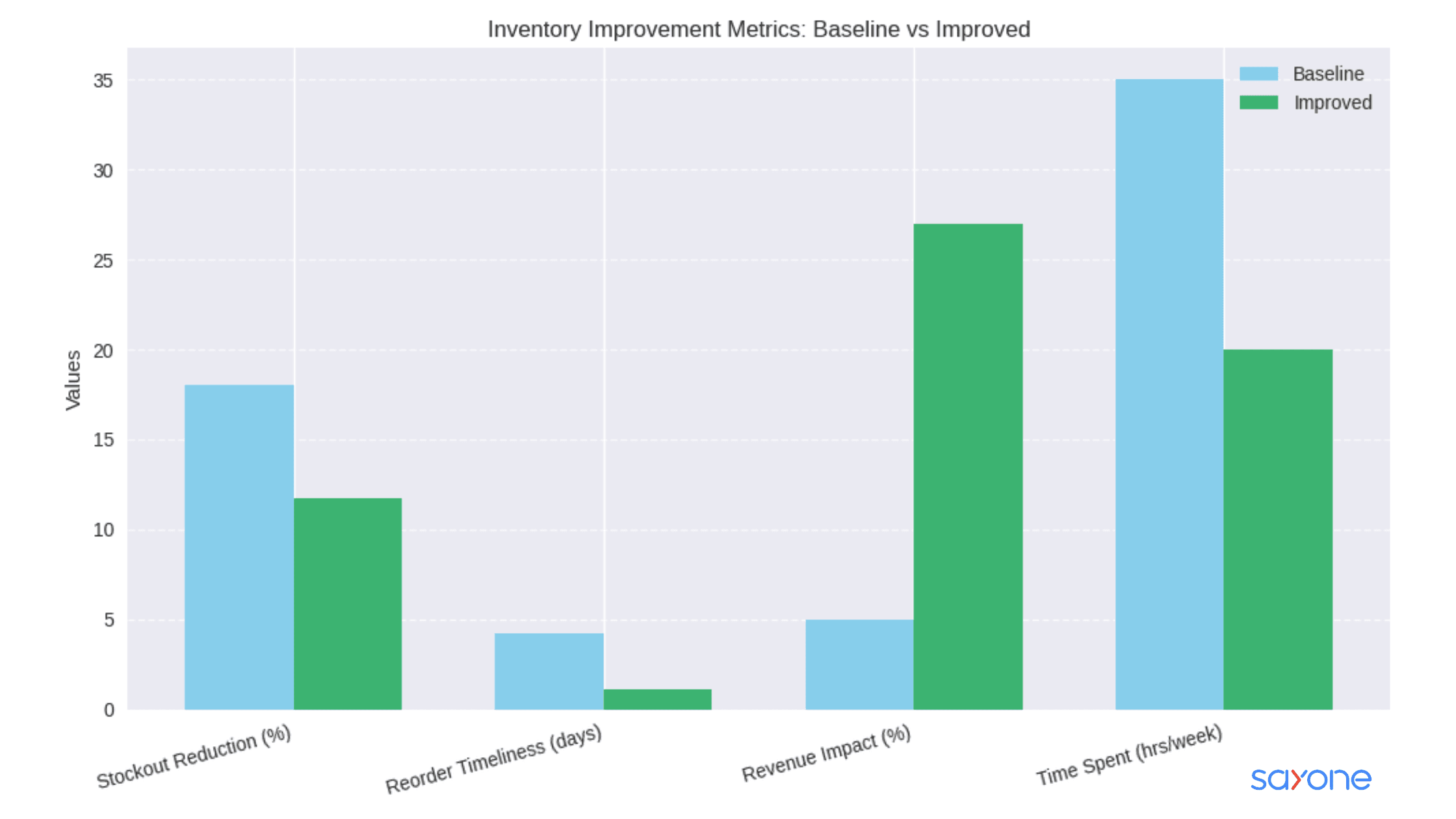
The stockout incidents reduced by 35% as proactive alerts gave 3-7 days lead time for reordering.
Average time from low stock detection to purchase order placement reduced by 74%, owing to automated, real-time notification.
Improving inventory management based on alerts, the store ensured availability during demand peaks, increasing sales by 22%.
The alert system saved 15 hours of the team’s time every week, which was earlier spent on manual monitoring.
With the low stock alert successfully in place, the next step is to create an automated replenishment workflow that triggers predefined actions the moment stock reaches a critical level. The low-stock alert system is a core strategy for every e-commerce store to move toward zero stockouts without overstocking. Contact us to schedule a 15-minute call and see how we can customize a low-stock alert system that cuts stockouts and keeps your warehouse lean and profitable.
We're committed to your privacy. SayOne uses the information you provide to us to contact you about our relevant content, products, and services. check out our privacy policy.


We collaborate with visionary leaders on projects that focus on quality