
Subscribe to our Blog
We're committed to your privacy. SayOne uses the information you provide to us to contact you about our relevant content, products, and services. check out our privacy policy.


Generating table of contents...
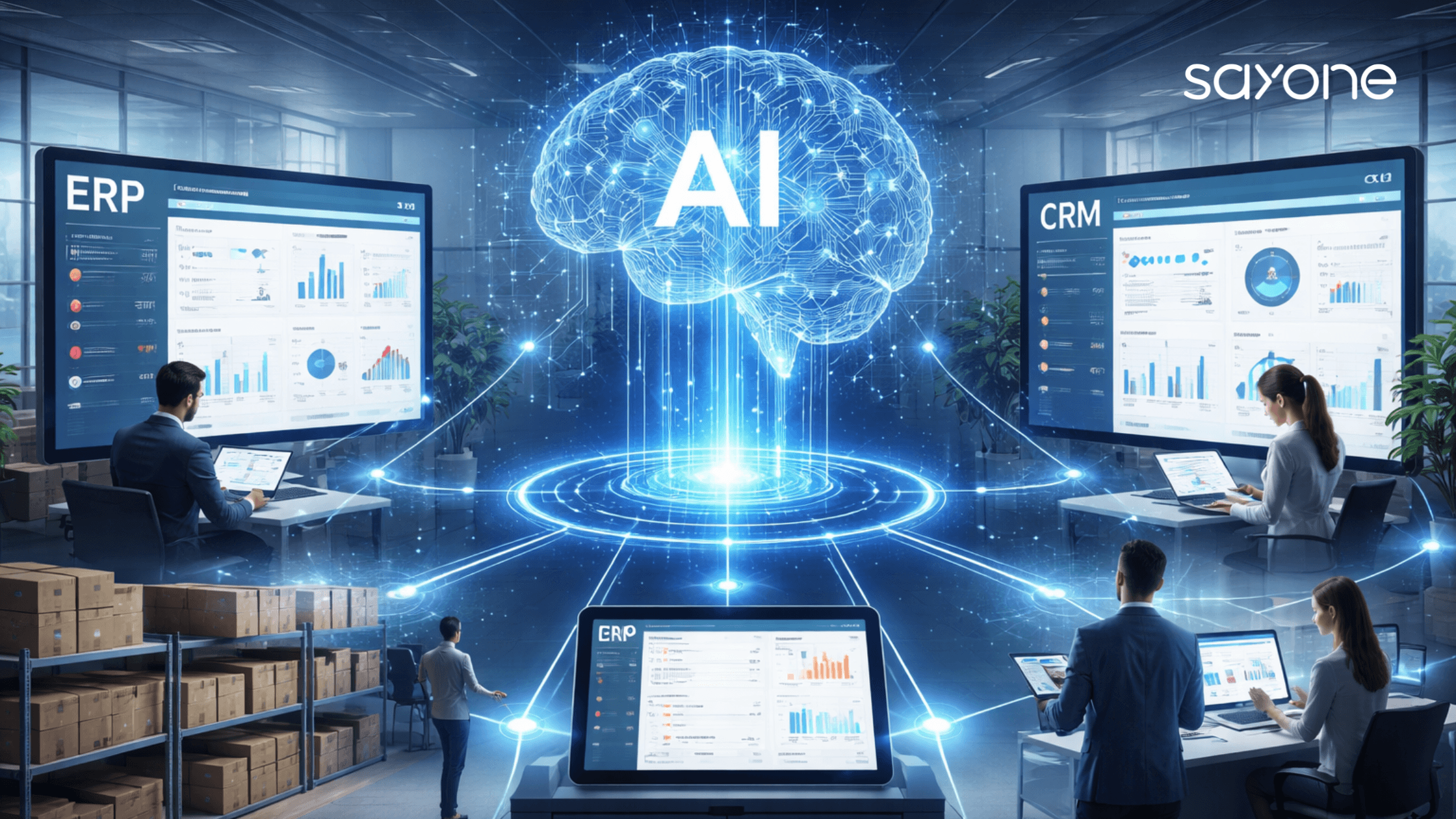
Have you ever lost sales because your retail systems didn’t warn you about sudden demand spikes or stockouts? Many retailers experience this even after integrating their ERP, CRM, and inventory systems. This is because integration only enables sharing data but doesn't interpret it. What retailers really want today is a retail system that is capable of analyzing data, deriving insights, and even working on it. That is how top retailers are transforming their store platforms into self-performing engines. This blog explains how small and medium retailers can build a high-converting retail platform that stores, shares, and analyzes data by integrating AI web applications into their existing platforms.
AI integration connects the AI web application with existing systems that save operational data, like the ERP, CMS, inventory system, etc. Through this connection, business data can be analyzed automatically to improve decisions, operations, and customer experience. It’s not about replacing your existing system, but similar to having a highly efficient assistant who reads all your systems and tells each one what it needs to know in real time. Today, AI integration is not just meant for top retailers but also for small and medium retailers who want a centralized intelligence layer in their retail business.
While ERP systems help retail businesses manage orders, human resources, review financials, and track inventory levels, they function as an independent system without sharing insights effectively. After integrating AI with the retail ERP system, it retrieves real-time signals like sales velocity, supplier delays, seasonal trends, and so on. Unlike before, AI automatically analyzes the data and interprets it to generate important insights instantly.
Here are some of the benefits of this integration:
Traditional CRM systems only store data like customer names, contact details, purchase history, and customer interaction data, but cannot identify what they mean or predict customer behaviour. By integrating CRM with AI, the data is automatically used for predicting customer behaviour and creating a real-time personalized experience.
Some of the key benefits of the integration include:
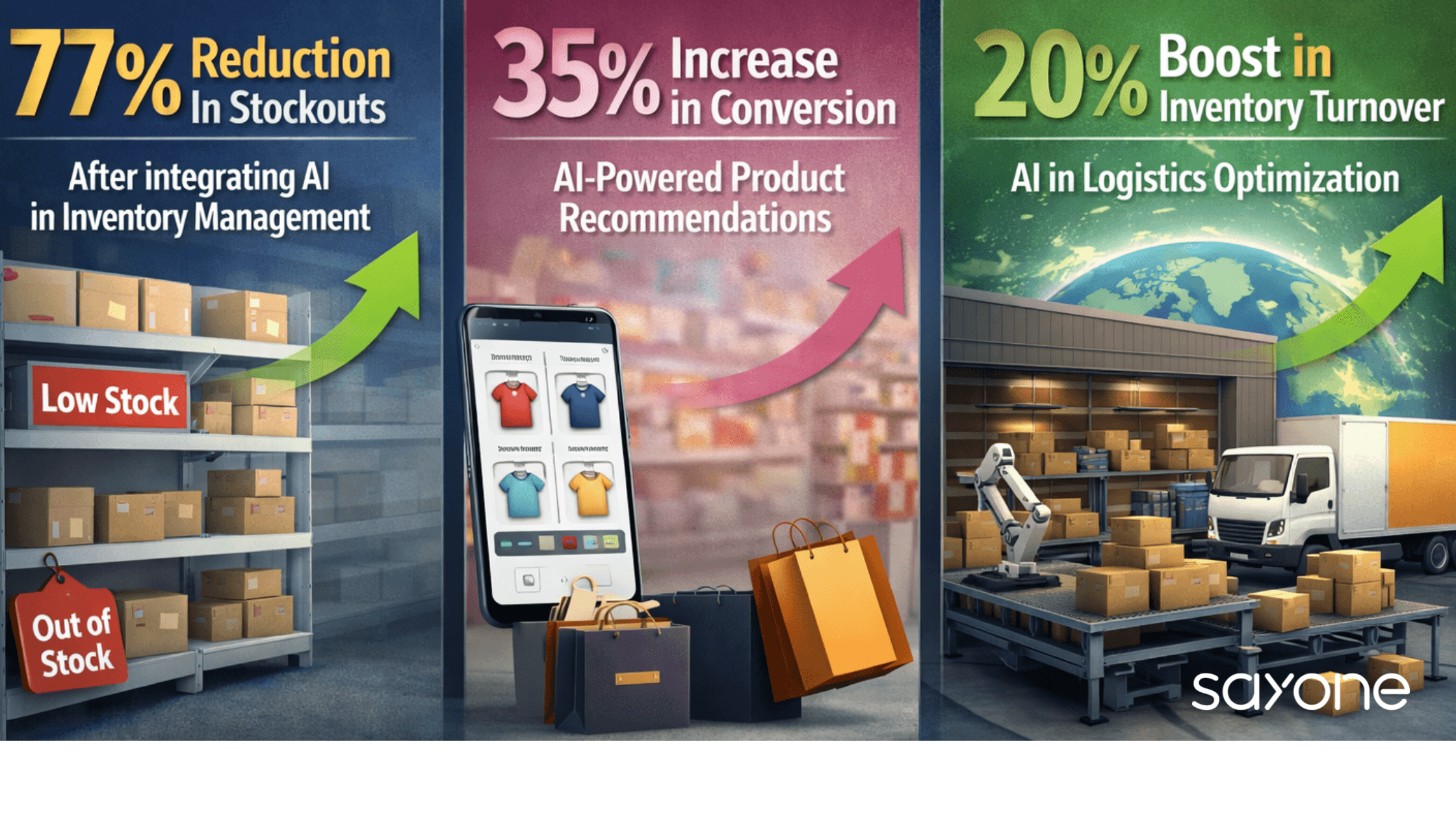
The existing inventory management system tracks stock levels, records product movement, and manages reordering based on fixed rules. Inventory mismanagement leads to revenue loss as overstock ties up cash and understock results in lost sales. For inventory management to be effective, it needs to be predictive, rather than reactive, and that is why integrating AI with inventory management system is important for retail businesses.
AI-powered inventory management enables:
Most retailers and small teams lack in-house technical skills for implementing this, but that shouldn’t be a reason why businesses avoid integration. Instead of building a new internal team, businesses can have access to developers who specialize in retail system integration. You can engage them until the integration is built, and also for post-integration support.
AI integration is not about replacing your existing system, but about making it work smarter. AI integration is important to your business, not just because your competitors are using it but because you need the efficiency of AI to deliver what your customers expect from you.
Want to see what AI integration could look like for your retail setup? Our developers work with retailers like you every week.
Book a free consultation with our integration experts today.
We're committed to your privacy. SayOne uses the information you provide to us to contact you about our relevant content, products, and services. check out our privacy policy.


We collaborate with visionary leaders on projects that focus on quality