
Subscribe to our Blog
We're committed to your privacy. SayOne uses the information you provide to us to contact you about our relevant content, products, and services. check out our privacy policy.


Generating table of contents...
What if the biggest limitation holding back your AI project isn't the model's intelligence, but its inability to truly connect? What if you could unlock the full potential you already know is there, waiting behind a wall of context limits and inaccessible APIs?
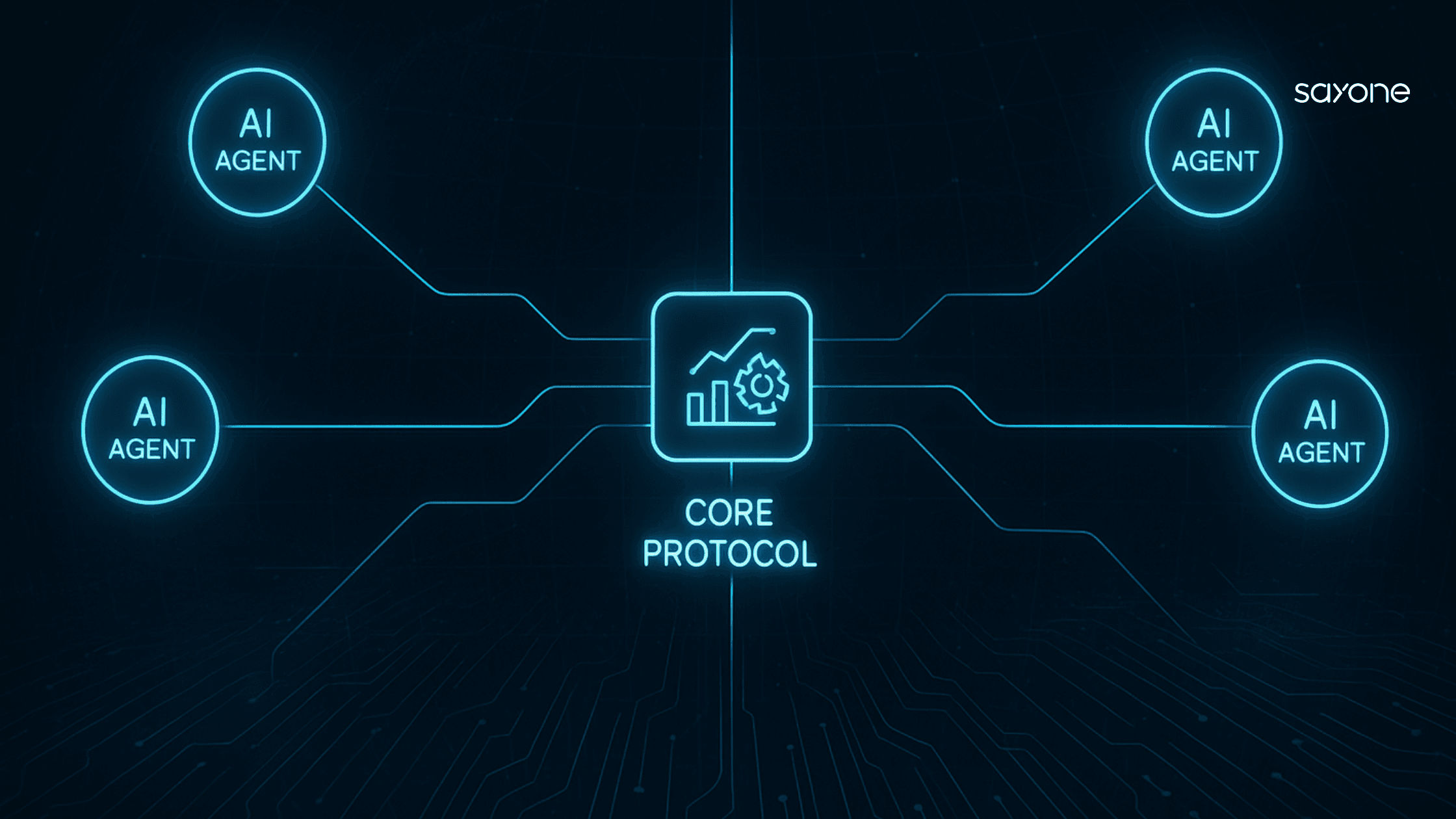
This challenge has limited enterprise AI adoption, until now. As a solution to this challenge Anthropic introduced a standard called Model Context Protocol (MCP) in late 2024 to unlock the real strength of AI agents and expand their abilities to a new extent.
MCP is an open-source standard that provides a unified way for large language models (LLMs) to connect with external databases, CRMs, cloud storage, or specialized enterprise workflows. Before the introduction of MCP, agents needed custom integrations, manual prompt engineering, and custom one-off connectors to interact with tools, databases, and external systems. Today, custom one-off integrations are unnecessary; AI can access data from the enterprise app in real-time and exchange data securely. MCP eliminates the barriers between AI agents and external tools or enterprise data, replacing isolated task execution with integrated task execution that improves efficiency and scalability.
Does your organization use AI agents for isolated tasks alone without fully integrating into the broader operational ecosystem? Most organizations do the same because their agents are unable to access external tools efficiently. However, MCP transforms this situation by enabling AI to connect seamlessly with core business systems and workflows.
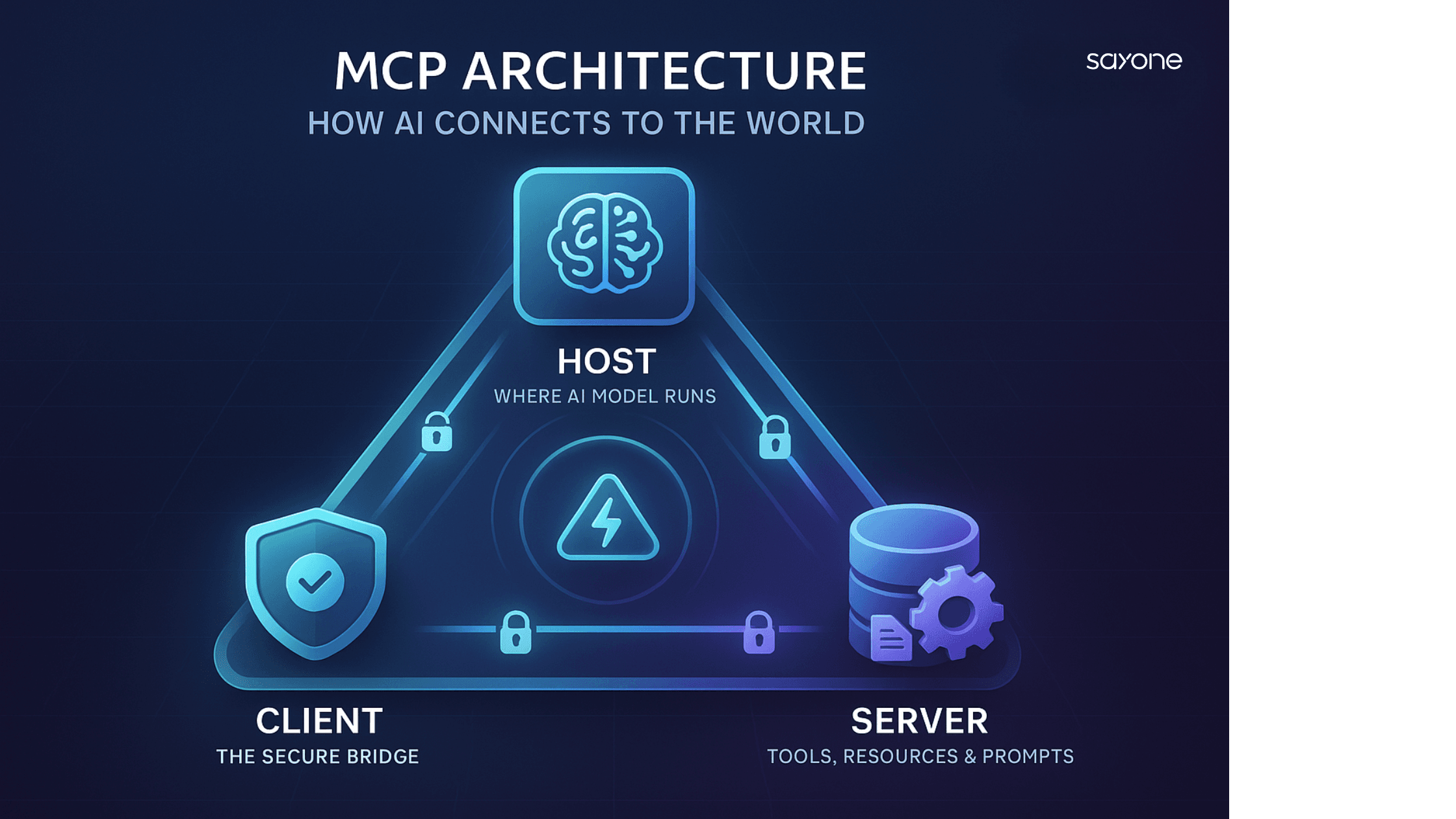
The MCP architecture is built around three core components, which are host, client, and server. The three components work together to let AI models securely interact with external systems. 1. Host The host is where the AI model runs, like Claude, ChatGPT, etc. It provides the brain but requires MCP to access external tools and data. 2. Client The client acts as the bridge between the host and MCP servers. It manages communication, permissions, and ensures requests are routed correctly. 3. Server The server is where the actual integrations live. It exposes tools, resources, and prompts that the AI can use: Tools: Functions like “update CRM record” or “fetch invoice.” Resources: Data sources such as documents, APIs, or databases. Prompts: Predefined tailwind templates guiding AI tasks like “summarize contract”.
This design ensures:-
If AI could seamlessly connect with every system you use, what’s stopping your business from leading the future? Here are the steps to include MCP into your system.
Educate your team on its architecture, benefits and security models to build a strong foundation through workshops, internal briefings or expert-led sessions.
First, map out repetitive processes that are data-intensive or require real-time decision-making. This approach gives you a clear business case for the adoption of MCP, while simultaneously showing early ROI.
The MCP server bridges your AI assistant to enterprise systems. To set one up, you define the tools, resources, and prompts the AI has access to. Start small to test functionality and deploy more servers as needed, based on performance.
Tailor MCP security mechanisms to your compliance requirements and define who can approve AI action, which data is accessible and how interactions are monitored.
Choose a controlled environment to run real world scenarios and gather user feedback. Monitor outcomes such as reduced errors, time saved and employee satisfaction.
Deploy MCP across multiple systems and departments, scaling up or down as business needs change.
These steps give a road map, but enterprises that adopt MCP with expert guidance accelerate integration, minimize risk and gain competitive advantage.
As MCP service providers, SayOne has expertise in efficiently implementing MCP for businesses, covering everything from developing initial strategy to going live.
Contact us now to achieve proven ROI gains from smarter AI agents.
We're committed to your privacy. SayOne uses the information you provide to us to contact you about our relevant content, products, and services. check out our privacy policy.

We collaborate with visionary leaders on projects that focus on quality